How to Know When It’s Time to Ask for More Support
- Caregiver Resources
- Hospice
- Palliative Care
What Caregivers Often See and How to Navigate Them
Caring for someone with a serious illness can be one of the most meaningful roles you ever take on. It can also feel overwhelming, confusing, or emotionally heavy at times. Many family caregivers share that they spent weeks or months wondering whether what they were seeing was “normal,” whether they were missing something important, or whether they should be doing more.
If you are in that space, you are not alone. Support does not have to begin during a crisis, and you do not need to be certain about what kind of care is needed to start asking questions. Caregiver decision support is about helping you make sense of what you’re experiencing, understand your options, and feel more confident about next steps, whatever stage of the journey you’re on.
The signs below can help you recognize when additional support may bring more comfort, clarity, and peace of mind for both you and the person you love. These signs are common, and noticing them does not mean you’ve done anything wrong.
You may need more support if…
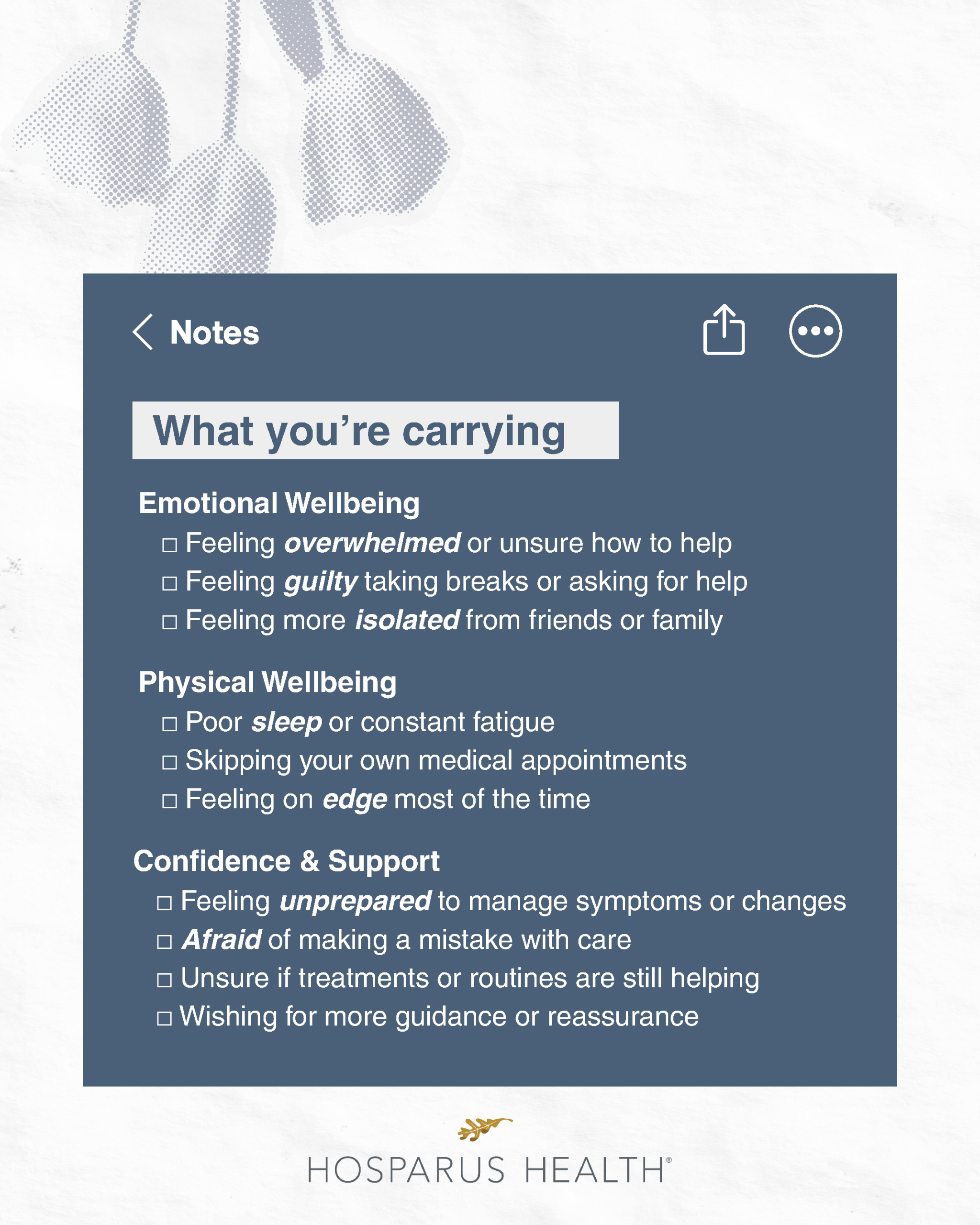
- Caregiving is becoming physically or emotionally exhausting.
You may notice:
- Difficulty getting enough sleep
- Less time for yourself or no breaks at all
- Growing anxiety, sadness, or guilt
- Your own health becoming harder to manage
These feelings are common. They do not reflect how much you care; they reflect how much you are carrying. When caregiving begins to affect your wellbeing, support can make a life-changing difference.
- Your loved one’s symptoms are getting harder to manage.
Changes may appear slowly or all at once. You might notice:
- More frequent or intense pain
- Shortness of breath
- Confusion or restlessness
- Increasing weakness or fatigue
- Significant changes in appetite or hydration
When symptoms start to affect daily life or cause worry, additional support focused on comfort and quality of life can help. Care teams who specialize in symptom management and guidance work alongside other providers to reduce stress, manage symptoms, and help families feel more confident about next steps. This type of support is often called palliative care.
- Medical appointments and medications feel overwhelming.
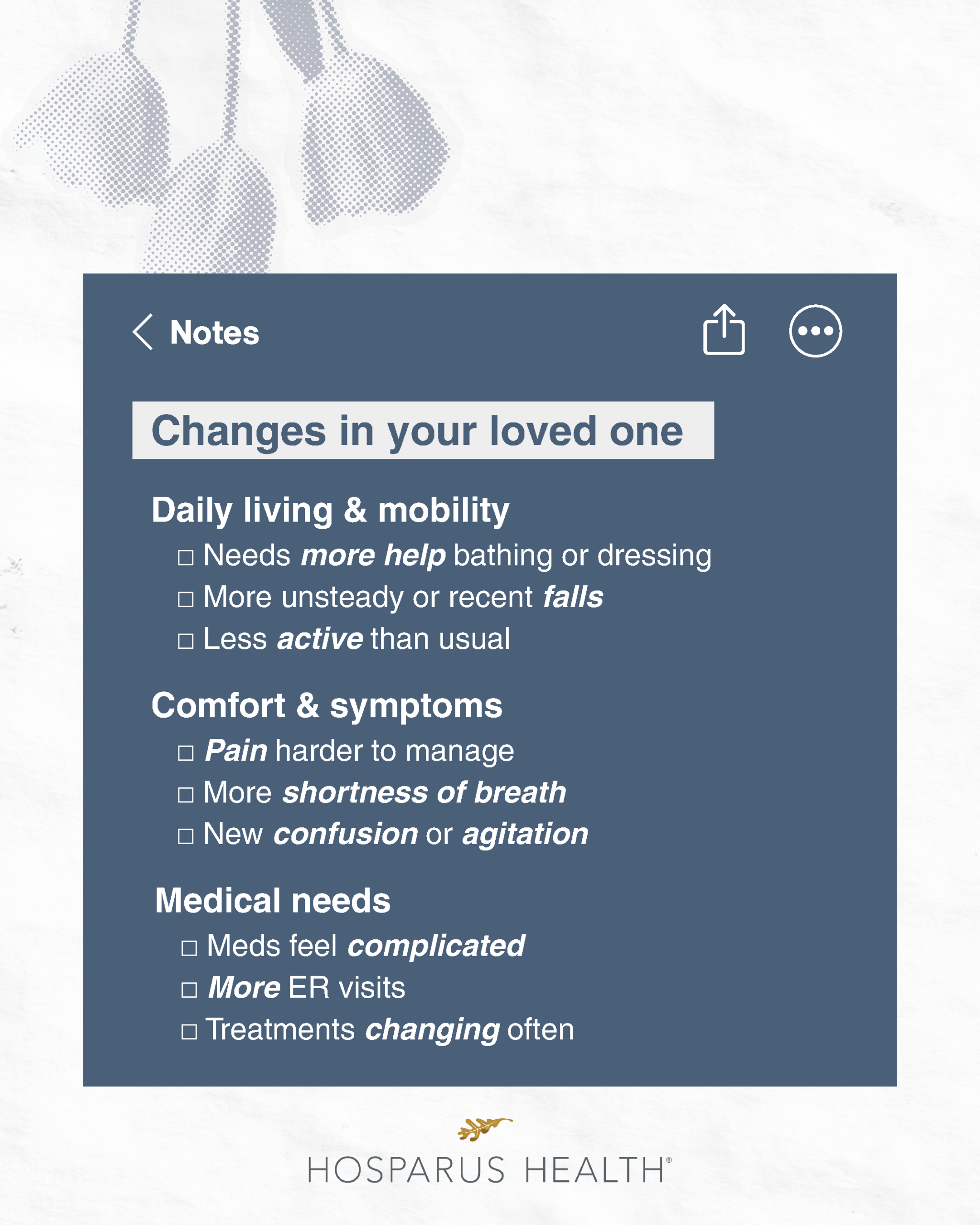 Serious illness often brings:
- More medications than before
- Multiple specialists and appointments
- Changing instructions or new concerns
- Symptoms that seem unpredictable
A care team focused on comfort and coordination can help you understand what is happening, organize care, and create a plan that feels more manageable.
- You’re worried about keeping your loved one safe at home.
Safety concerns often grow as illness progresses. You may notice:
- More falls or close calls
- Difficulty standing or walking
- Trouble getting in or out of bed
- Confusion that increases risk
If safety is becoming a constant worry, that is often a sign that extra help could bring more peace and stability.
- You’re wondering what the future will look like.
It is natural to have questions such as:
- “What should I expect from here?”
- “How will things change?”
- “What support might we need later on?”
Support focused on comfort and planning helps families have these conversations. Palliative care often plays a role in guiding them.
What early support can look like
You do not have to be ready for hospice to get meaningful help. Palliative care is designed to support people at any stage of a serious illness, even while they continue treatments.
Palliative care can help with:
- Symptom management
- Care coordination
- Emotional and spiritual support
- Guidance for families
- Planning for future needs
Many families who receive this kind of support early say they feel more prepared, less overwhelmed, and more connected to what matters most. To explore how support may fit your situation, you can read more about our services.
Reaching out early does not mean you’re giving up.
It means you care deeply and want the best for your loved one. It also means you deserve support, too. Asking for help creates more space for comfort, safety, and meaningful time together.
So… when should you call?
A simple guideline: If you are wondering whether it’s time to ask for help, it probably is.
 You do not need to know exactly what kind of care you need. One conversation with our team can help you:
- Understand what you’re seeing
- Learn ways to make daily care easier
- Manage symptoms more confidently
- Plan for the future
- Feel supported and reassured
There is no pressure and no commitment. It is simply a chance to talk with someone who understands what caregiving is really like.
You’re doing an incredible job. We’re here to help whenever you need us.
If anything in this article sounds familiar, it may be the right time to talk with someone who understands what you’re going through. Support can start with a simple conversation.
Give us a call 24/7 at (502) 456-6200
or reach out in the way that feels most comfortable to you:
We’re here to listen, answer questions, and help you navigate whatever comes next.
Related Reading
If you’re caring for a loved one while managing family and work responsibilities, these resources can help you feel more prepared and supported: