Caregiver Organization: What to Have in Place When Supporting Someone With a Serious Illness
- Article
- Caregiver Resources
A practical guide for family caregivers
Caring for someone with a serious illness often begins quietly. A diagnosis. A hospital stay. A growing sense that more responsibility is falling on your shoulders. Many caregivers step into this role without much time to prepare, learning as they go while juggling emotions, appointments, and daily life.
Getting organized is not about doing everything perfectly. It is about creating a sense of steadiness when things feel uncertain. Having a few key pieces of information in one place can reduce stress, improve communication, and help you feel more confident as caregiving responsibilities grow.
Below are practical ways to organize what matters most, without adding more pressure to an already full plate.
-
Keep essential medical information in one place
When symptoms change or questions arise, having accurate information readily available can save time and ease anxiety. Consider keeping a simple folder or digital note that includes:
- Current diagnoses and recent medical history
- Names and contact information for healthcare providers
- A list of medications, including dosages and schedules
- Known allergies or past reactions
- Insurance information
This does not need to be complicated. Even a single page that you update occasionally can be incredibly helpful during appointments or conversations.
-
Locate important documents early
You do not need to have every document finalized, but knowing where key paperwork lives can prevent stress later. Useful documents to locate or discuss include:
- Insurance cards and policy details
- Advance directives or living wills, if available
- Power of attorney or healthcare proxy information
- Emergency contact lists
If some of these documents do not exist yet, that is okay. Organization starts with awareness, not completion.
-
Track daily changes and routines
Caregiving often involves noticing small changes over time. Keeping brief notes can help you recognize patterns and communicate concerns more clearly.
You might track:
- Changes in energy, appetite, or sleep
- New or worsening symptoms
- What seems to help your loved one feel more comfortable
- Questions that come up between appointments
This does not need to be detailed or medical. A small notebook or notes app is often enough.
-
Clarify who to contact and when
One of the most stressful parts of caregiving is not knowing who to call when something feels off. If possible, clarify:
- Which provider handles symptom questions
- How to reach support after hours
- What situations require a call for guidance
- How updates should be shared with family members
Having a clear plan helps you feel less alone when decisions feel heavy.
-
Organize support for yourself, too
Caregivers often focus entirely on the person they are supporting and forget their own needs. Organization also means recognizing what helps you stay well.
Consider:
- Scheduling your own appointments
- Accepting help with meals, errands, or respite
- Writing down reminders to rest or step outside
- Identifying one person you can check in with honestly
Supporting someone else is easier when you are supported as well.
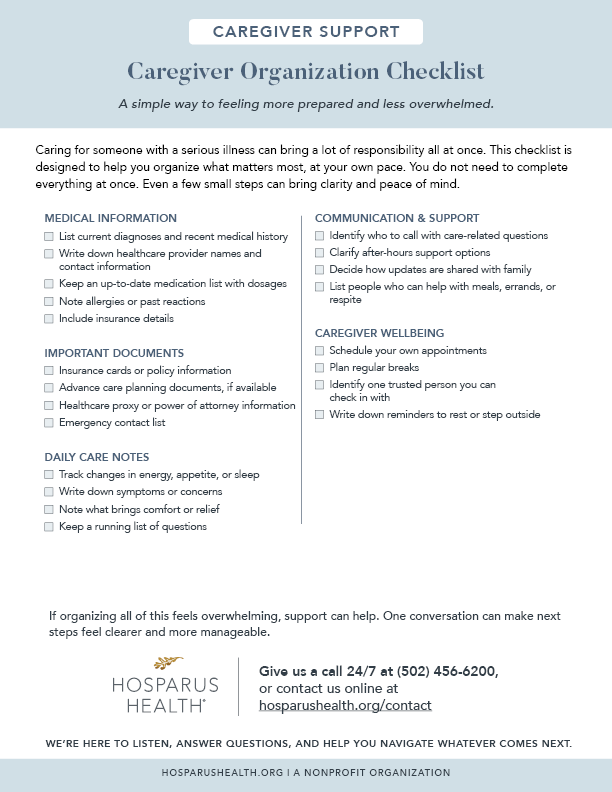
Download our Caregiver Organization Checklist
You do not have to keep all of this information in your head. We created a downloadable Caregiver Organization Checklist to help you keep important information, daily care notes, contacts, documents, and reminders organized in one place. Use it at your own pace and focus on what feels most helpful right now.
Caregiver Organization Checklist
When organization feels overwhelming
If even gathering this information feels like too much, that is a signal, not a failure. Many caregivers reach a point where they benefit from guidance, reassurance, and help making sense of what they are seeing.
You do not need to know exactly what kind of care or support is right. One conversation can help you understand priorities, organize next steps, and feel more grounded.
If you would like to talk with someone who understands caregiving from both a practical and human perspective, support can begin with a simple conversation.
Give us a call 24/7 at (502) 456-6200, or reach out in the way that feels most comfortable to you:
We are here to listen, answer questions, and help you feel more prepared for whatever comes next.