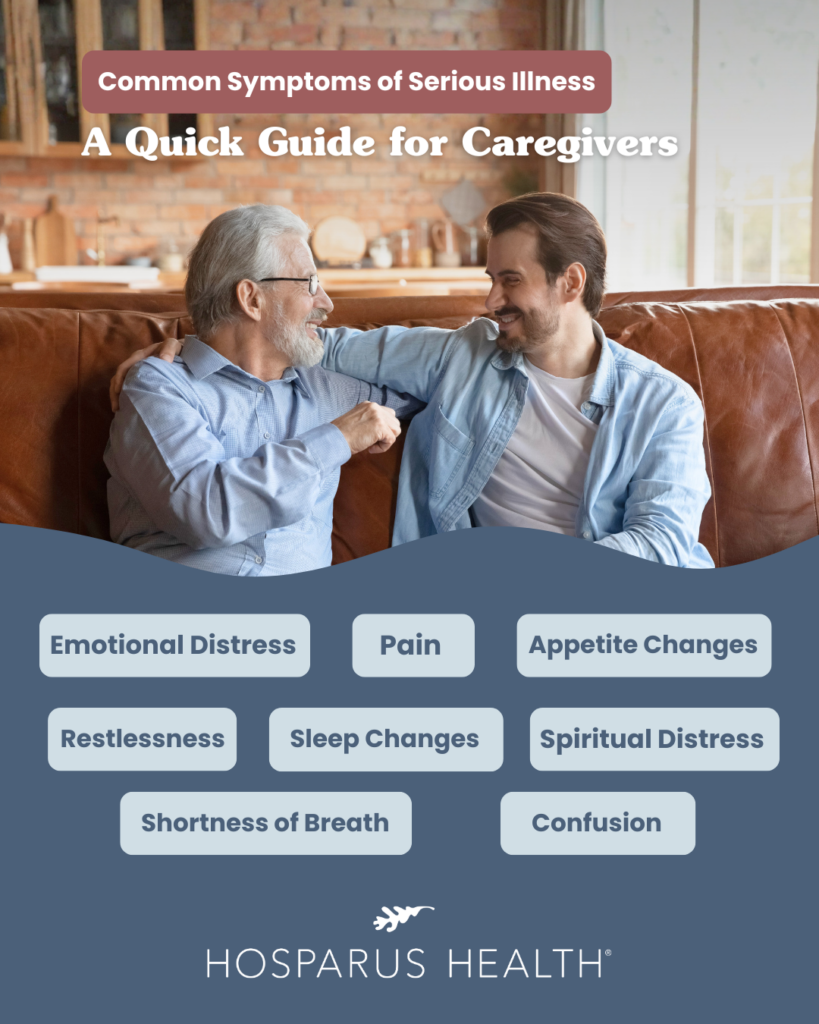
Understanding Common Symptoms in Serious Illness
- Caregiver Resources
- Hospice
- Palliative Care
What Caregivers Often See and How to Navigate Them
When you’re helping someone you love through a serious illness, symptoms can change quickly. Even expected changes can feel confusing or overwhelming. Many families tell us they struggle to understand what symptoms mean, how to respond, or when it may be time to ask for more help. This is exactly why caregiver support for serious illness symptoms is so important.
You do not have to figure this out alone. With the right information and timely support, you can feel more confident and prepared as changes arise. This guide explains the symptoms caregivers most often notice, why they happen, and how to respond in ways that promote comfort and reassurance.
Pain: What It Is and How Caregivers Can Respond
Pain is common in many serious illnesses. It may be constant or come and go throughout the day.
Signs to look for:
- Facial tension or wincing
- Protecting a body part
- Withdrawal from activities
- Restlessness or irritability
Many families worry about pain medication or whether pain means the illness is worsening. What matters most is comfort.
What may help:
- Ask your loved one where it hurts and how strong the pain feels.
- Note patterns, such as time of day or triggers.
- Call the doctor if pain becomes more frequent or disrupts rest.
If pain is getting harder to manage, specialty support such as palliative care can provide new options for relief.
Shortness of Breath: One of the Most Distressing Symptoms for Families
Shortness of breath, also called dyspnea, can occur in lung disease, heart conditions, cancer, or advanced illness of many kinds. Even mild shortness of breath can cause fear for both the person experiencing it and the caregiver supporting them.
Signs you might notice:
- Faster or shallow breathing
- Needing to pause while speaking
- Visible anxiety
- Feeling panicked during episodes
What may help:
- Encourage slow, steady breathing.
- Help your loved one sit upright.
- Use prescribed oxygen as directed.
- Keep the room cool or use a small fan.
If shortness of breath is happening more often or is harder to manage, additional support can make a meaningful difference.
Confusion, Restlessness, or Agitation
Changes in thinking, awareness, or behavior can happen during serious illness. These changes may be related to medications, infection, dehydration, sleep disruption, or the illness itself. For caregivers, they can be some of the most unsettling moments to witness.
You may notice:
- Forgetfulness or trouble concentrating
- Difficulty following conversations
- Saying things that don’t seem to make sense
- Increased restlessness or pacing
- Changes in sleep, such as being awake more at night
What may help:
- Speak calmly, using short and reassuring sentences
- Reduce background noise, bright lights, or overstimulation
- Maintain familiar routines when possible
- Offer comfort and reassurance, even if the conversation feels one-sided
If these changes appear suddenly, feel very different from usual, or begin happening more often, reaching out for guidance can help you understand what’s happening and what support may be helpful.
For many caregivers, simply knowing that confusion or agitation can be part of serious illness — and that support is available — brings reassurance and helps them feel more prepared.
Changes in Appetite or Sleep
It can be concerning when someone begins eating less, drinking less, or sleeping more. These changes often happen naturally as the body conserves energy during a serious illness.
Signs caregivers often notice:
- Eating only small amounts
- Less interest in food or drink
- More frequent naps
- Less energy for conversations or activities
What may help:
- Offer small, favorite foods without pressure.
- Provide sips of water, ice chips, or mouth care if intake is low.
- Allow extra rest without trying to increase alertness.
If appetite or hydration change suddenly or alongside other new symptoms, contacting the doctor can help determine next steps.
Emotional and Spiritual Symptoms
Serious illness affects more than the body. It can bring sadness, fear, frustration, withdrawal, or questions about meaning and purpose. These symptoms are just as real as physical ones.
What may help:
- Gentle conversation
- Reassurance and presence
- Support from chaplains, counselors, or trusted community members
Families often feel relief knowing they are not expected to manage these feelings alone.
When to Seek Additional Support
One new symptom does not always mean something urgent. What matters most is the pattern over time.
You may benefit from additional support if:
- Symptoms are happening more often
- Your loved one seems less stable overall
- Multiple symptoms are becoming harder to manage at home
- You are calling the doctor more frequently
- You feel overwhelmed, uncertain, or unprepared
Palliative care and hospice teams specialize in helping families navigate these moments with confidence. To explore how different types of support may fit your situation, you can review our services.
You’re Doing Your Best. Support Is Always Within Reach.
If you are noticing changes or feeling unsure about what symptoms mean, talking with someone who understands serious illness can bring clarity and peace of mind.
For questions or to learn whether additional support may help:
Call us 24/7 at (502) 456-6200
You do not have to manage serious illness alone. Support is here whenever you need it.