Home Safety Tips for Caregivers: A 5-Step Checklist to Prevent Falls and Injuries
- Caregiver Resources
- Palliative Care
A Guide for Family Caregivers
Caring for someone you love often means making small adjustments to keep them safe, comfortable, and supported at home. Many families don’t realize how much the home environment influences symptoms, energy levels, confidence with daily activities, and overall quality of life.
A few thoughtful changes can help prevent falls, reduce stress, and make caregiving feel more manageable.
Below are simple, practical ways to create a safer, more supportive home for someone living with a serious illness.
- Reduce fall risks by simplifying the space
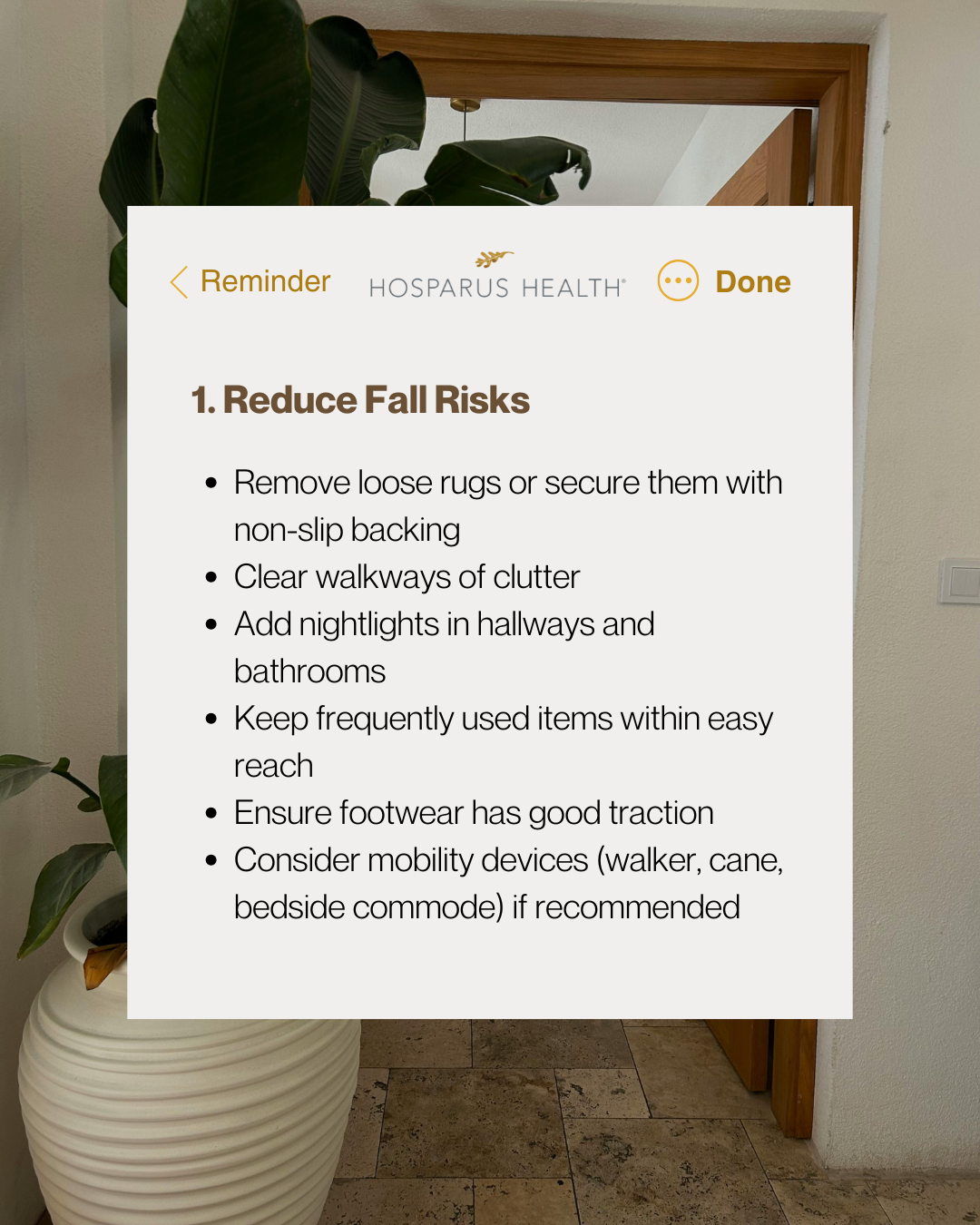 Falls are one of the most common concerns caregivers face. You may find yourself watching your loved one closely or worrying every time they stand up. These steps can help lower the risk:
- Remove loose rugs or secure them with non-slip backing
- Clear walkways of clutter
- Add nightlights in hallways and bathrooms
- Keep frequently used items within easy reach
- Make sure shoes or slippers have good traction
If mobility is changing, using supportive devices (such as a walker, bedside commode, or transfer bench) can make day-to-day routines safer and less tiring. If you’re unsure what equipment might help, your loved one’s healthcare provider can make recommendations based on their condition and needs.
You may also find these additional tips helpful: How to Prevent Falls in the Home
- Support easier breathing and reduce fatigue
Serious illness can sometimes make breathing feel more difficult, especially when moving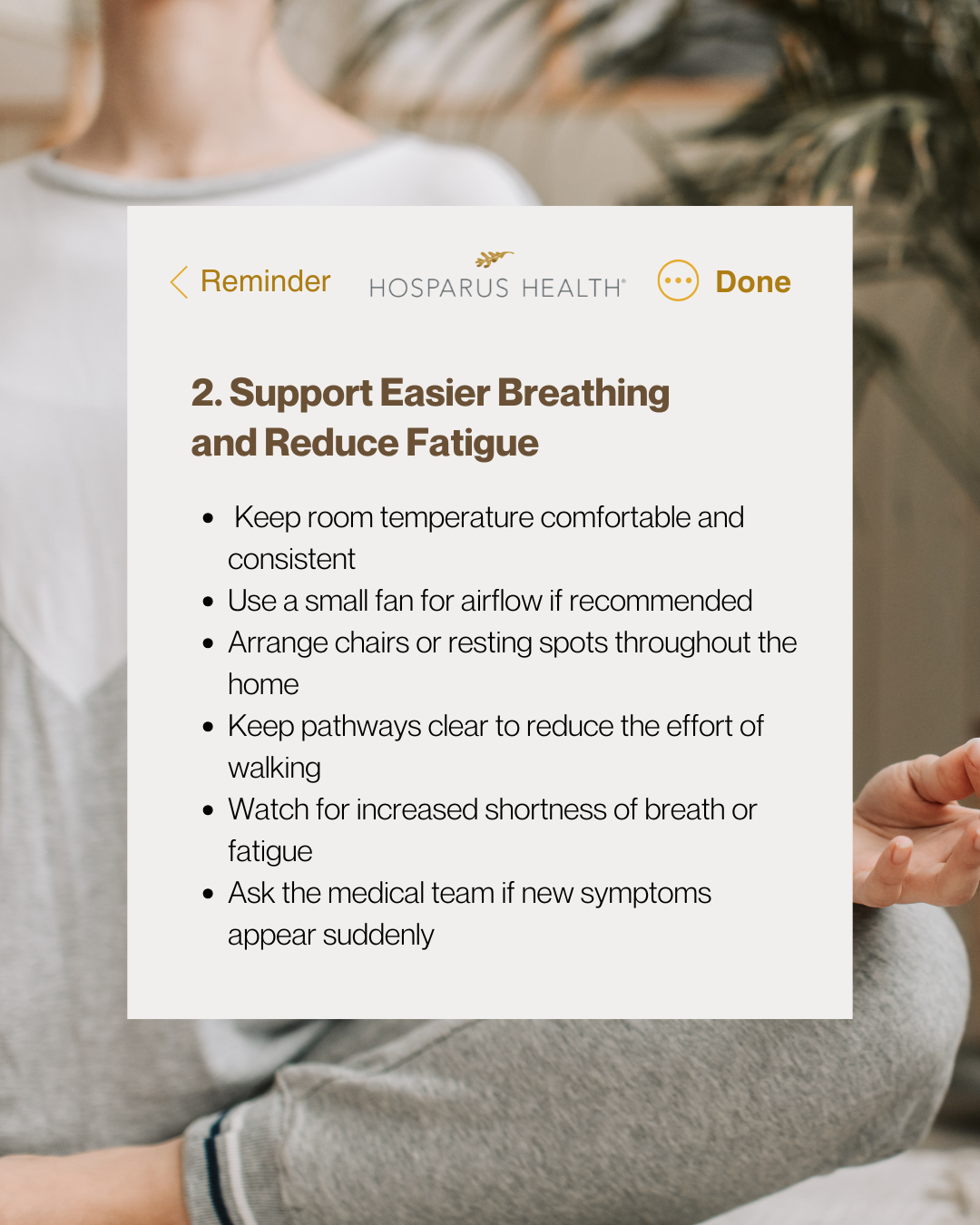 around the home. Palliative care teams often help families manage symptoms like shortness of breath and fatigue so people can remain more comfortable at home. You can help by:
- Keeping pathways clear so walking requires less energy
- Positioning chairs or resting spots throughout the home
- Adjusting the room temperature to a level that feels comfortable
- Using a small fan to improve airflow if recommended by the care team
- Watching for increased shortness of breath during activity
If shortness of breath becomes more frequent or begins to happen during activities that were previously easy, speaking with a healthcare provider can help you understand what may be changing and what support could help improve comfort.
- Make the bedroom a place of rest and safety
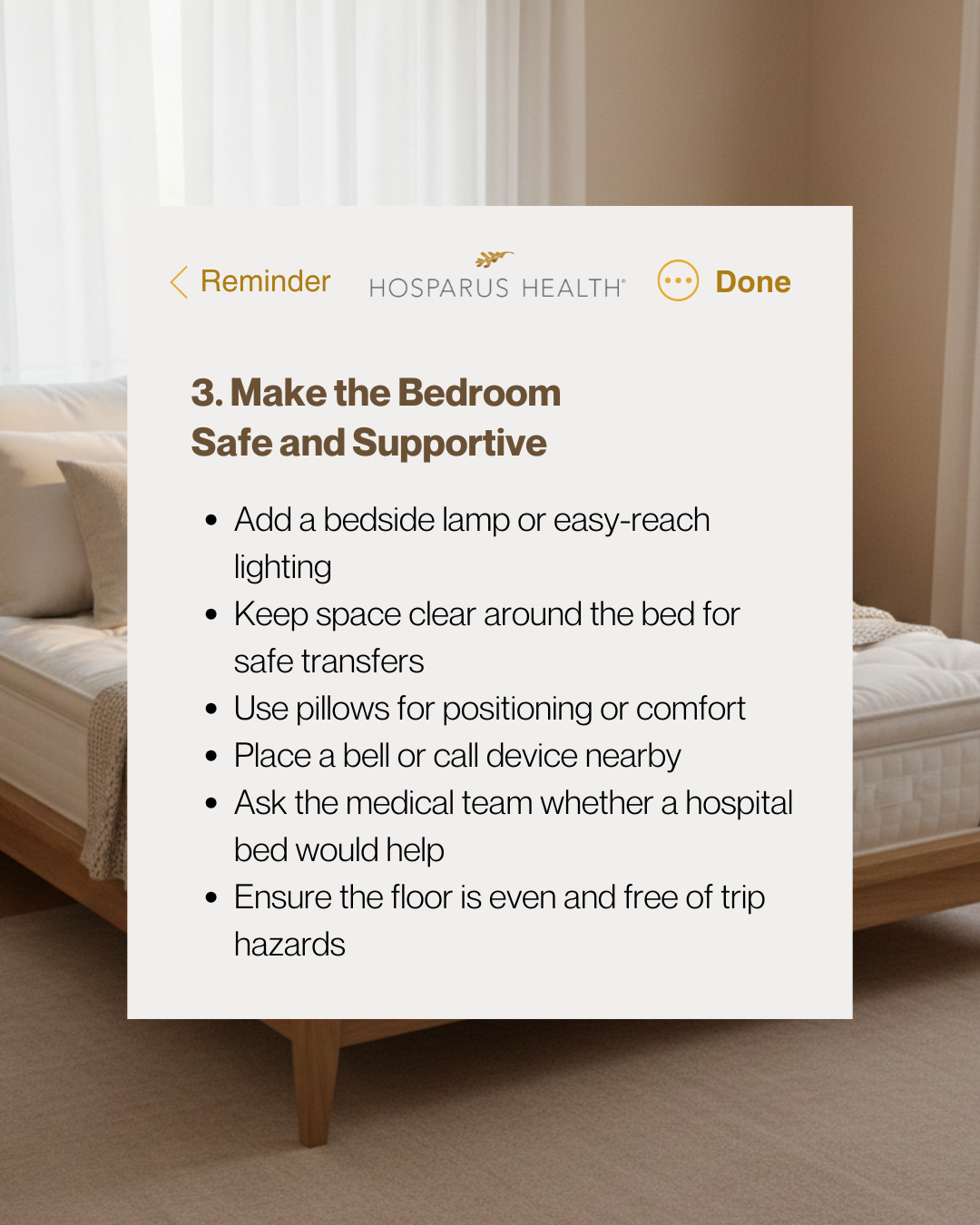 Changes in energy, sleep patterns, and mobility often mean the bedroom becomes central to daily life. A safer, more comfortable setup may include:
- A firm, supportive mattress at a height that is easy to get in and out of
- Bedside lighting that is easy to reach
- A bell or call device your loved one can use to get your attention
- Adjustable pillows to help with positioning or ease shortness of breath
- Clear space around the bed to allow safe transfers in and out
If turning or repositioning has become more difficult, talk with the medical team about whether a hospital bed or other equipment could make caregiving easier and reduce strain for both of you.
- Create a bathroom setup that prevents slips and strain
Bathrooms are high-risk areas for falls, but they’re also one of the easiest places to make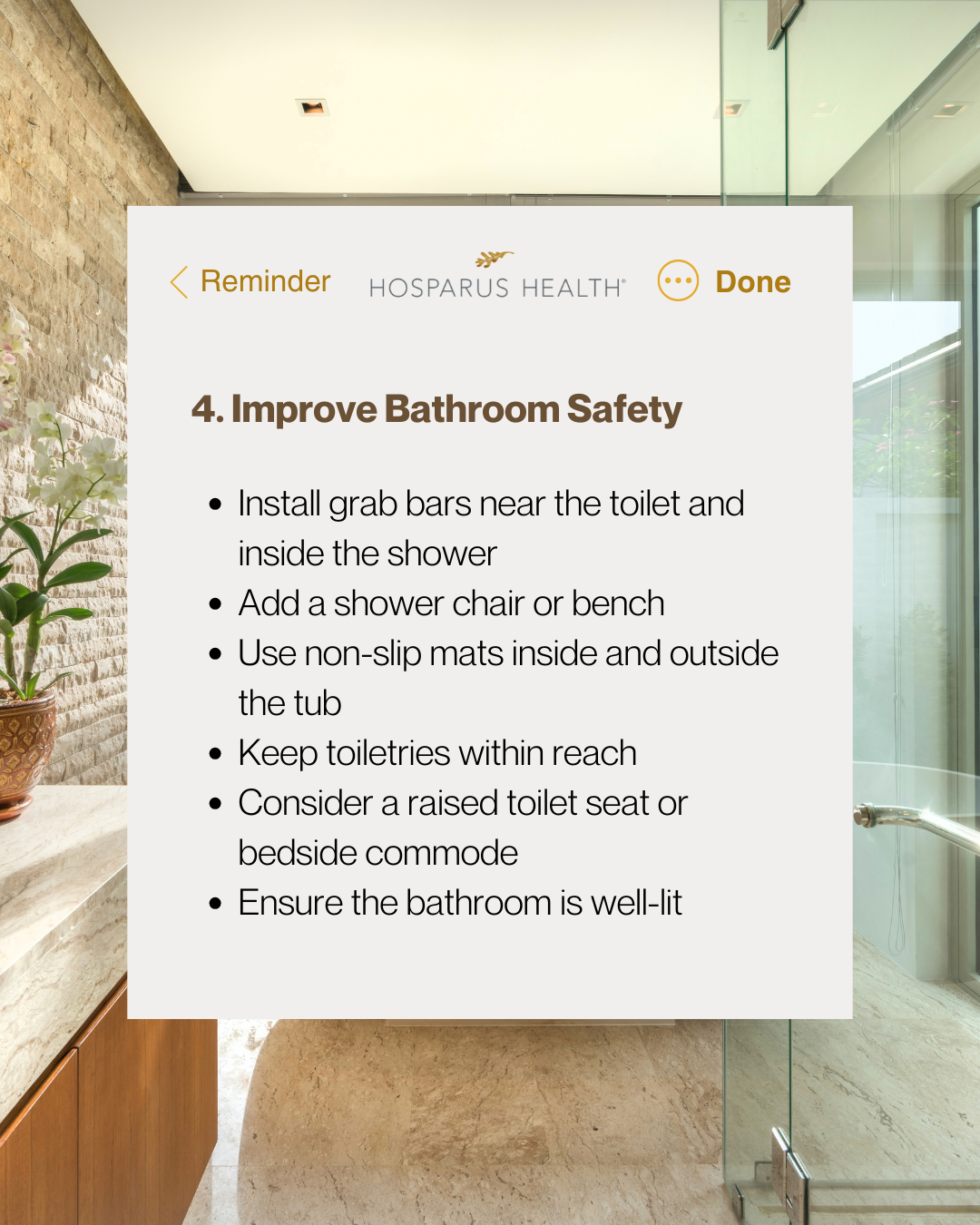 meaningful improvements:
- Install grab bars near the toilet and inside the shower
- Add a shower chair or bench to reduce fatigue
- Use non-slip mats inside and outside the tub
- Consider a raised toilet seat or bedside commode for easier access
- Keep essential toiletries within reach to reduce bending or stretching
These simple additions can help your loved one feel more confident with personal care while reducing the physical and emotional strain on you as the caregiver.
- Keep medications organized and easy to manage
Caregiving often brings new medication responsibilities. You may be handling prescriptions,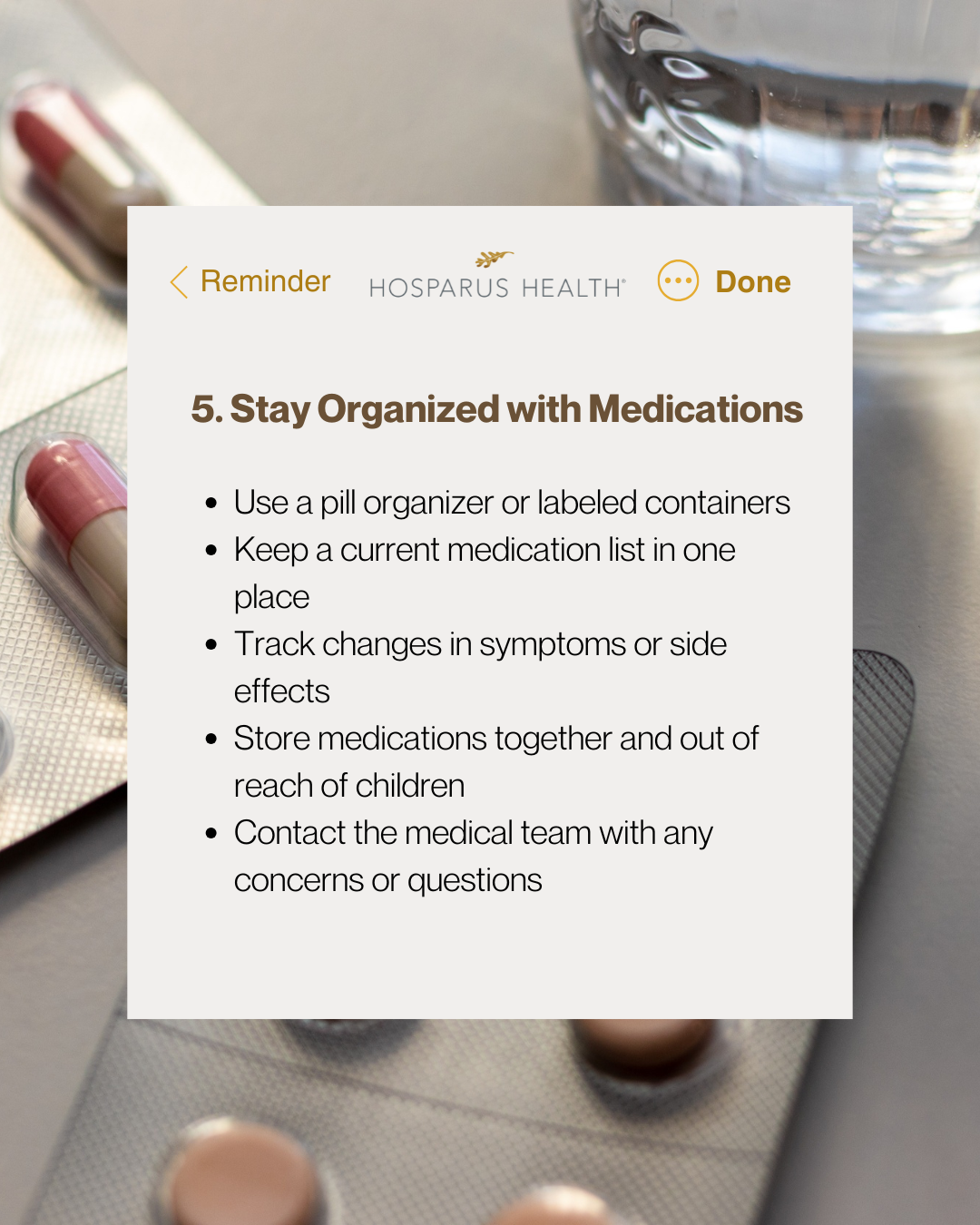 monitoring symptoms, or keeping track of changes from different appointments.
These strategies can help:
- Use a pill organizer or labeled containers
- Keep an up-to-date medication list with dosages and schedules
- Store medicines in one designated location
- Track any side effects or new symptoms in a small notebook
- Ask questions whenever something seems unclear
For general guidance on safe medication use for older adults, the National Institute on Aging offers a helpful overview.
You don’t have to do this alone
Small adjustments can make a big difference, but caregiving is still a lot to carry. If the home no longer feels as safe as it once did, or if caregiving is becoming more overwhelming, talking with a care team can help you understand what types of support may be available — including palliative services that focus on comfort, symptom relief, and help for families.
Support can begin with a simple conversation.
Give us a call 24/7 at (502) 456-6200, or reach out in the way that feels most comfortable to you:
We’re here to listen, answer questions, and help you create a safer, more comfortable home for the person you love.
Related Reading
If you’re caring for a loved one while managing family and work responsibilities, these resources can help you feel more prepared and supported: