10 Things I Wish I Had Known About Caregiving
- Article
- Caregiver Resources
A reflection many family caregivers share
Most people do not plan to become caregivers. It happens gradually or all at once, often alongside fear, love, and uncertainty. Many family caregivers later say they wish someone had told them what to expect, not medically, but emotionally and practically.
These are lessons caregivers often share after living this role for a while. If you are early in the journey, you are not behind. If you are already feeling stretched, you are not alone.
-
You do not have to wait for a crisis to ask for help
Many caregivers believe they should manage on their own until things become unmanageable. In reality, support is often most helpful before a crisis occurs.
-
Feeling overwhelmed does not mean you are failing
Caregiving can be meaningful and exhausting at the same time. Both can be true. Feeling overwhelmed is a sign of responsibility, not weakness.
-
Symptoms can change faster than you expect
Even with careful planning, serious illness can shift quickly. Feeling unprepared in those moments is common and understandable.
-
Safety concerns are signals, not shortcomings
Concerns about falls, breathing, or daily tasks are not signs that you are doing something wrong. They are signs that your loved one’s care needs may be changing.
-
You will need support, not just information
Advice and checklists help, but emotional support matters just as much. Having someone to talk to can make caregiving feel less isolating.
-
Organization helps, but flexibility matters more
Plans are helpful, but caregiving often requires adjusting expectations. Being gentle with yourself is part of doing this well.
-
Caregiving can feel lonely even when people care
Friends and family may want to help but not know how. Feeling alone does not mean you are unsupported.
-
It is okay to ask the same questions more than once
Illness is complex, and stress affects memory. Asking for clarification is a strength, not an inconvenience.
-
Planning ahead can bring relief
Talking about what may come next does not take away hope. For many families, it brings calm and confidence.
-
Getting support earlier often leads to more peace
Many caregivers look back and wish they had reached out sooner. Early support can reduce stress and help families feel more prepared.
A resource you can keep
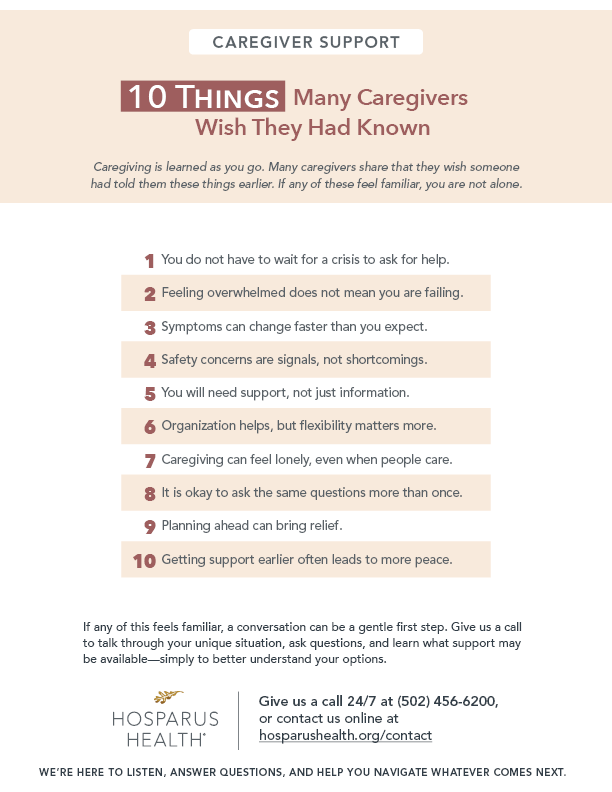
Download our free caregiver resource,“10 Things Many Caregivers Wish They Had Known,” for simple, reassuring guidance you can save, print, or share with someone else who may be navigating caregiving.
10 Things Caregivers Wish They Knew
The guide includes reminders such as asking for help before a crisis, planning ahead, staying flexible, and remembering that caregivers need support too.
If this feels familiar
If several of these reflections resonate, you are not alone. Caregiving is learned in real time, and no one is expected to navigate it without support.
If you would like to talk with someone who understands what caregiving is really like, support can begin with a conversation.
Give us a call 24/7 at (502) 456-6200, or reach out in the way that feels most comfortable to you:
We are here to listen, answer questions, and help you feel supported at every stage of the journey.
Keep reading. Recommended articles:
“How to Know When It’s Time to Ask for More Support”